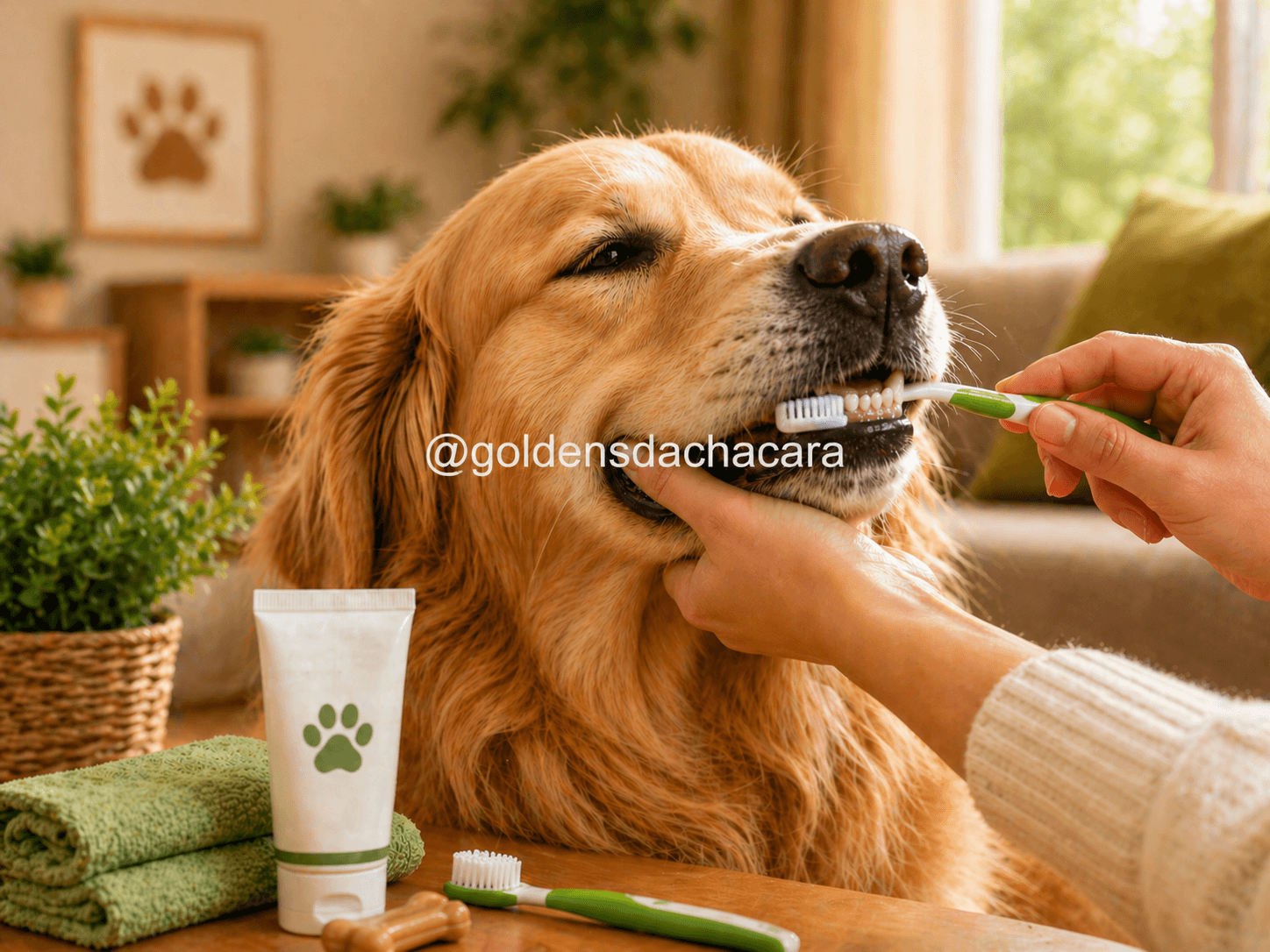
How to Clean Your Dog's Mouth: essential care
Learn how to properly clean your dog's mouth, prevent bad breath, and keep teeth and gums healthy.
Why oral hygiene matters so much
Many people do not realize that dogs also build up plaque and tartar over time. Without proper cleaning, this can cause bad breath, gum inflammation, pain while chewing, and even tooth loss.
Keeping oral hygiene up to date helps prevent disease and significantly improves your pet's quality of life.
How to clean your dog's mouth at home
Ideally, brush your dog's teeth 2 to 3 times per week (daily is even better). Always use products made for pets.
Simple step-by-step:
- Use a dog toothbrush or finger brush
- Apply veterinary toothpaste (never human toothpaste)
- Make gentle circular motions, mainly along the gumline
- Start on the sides of the mouth, where buildup is usually greater
- Be patient and make the process positive
At first, let your dog smell the products and reward each attempt. Over time, your dog will adapt.
Alternatives to support oral care
Besides brushing, you can support oral health with:
- Dental treats
- Chew toys made for dogs
- High-quality nutrition
- Regular veterinary evaluations
These tools do not replace brushing, but they help maintenance significantly.
When to see a veterinarian
If you notice gum bleeding, darkened teeth, strong bad breath, or difficulty eating, seek professional evaluation. In some cases, professional dental cleaning may be needed.
Caring for your dog's mouth is a simple habit that prevents bigger problems in the future and keeps a healthy smile for many years.
💡 Important tip: Building an oral hygiene routine from puppyhood makes everything easier. Start with a finger or finger brush and gradually move to a toothbrush, always with positive reinforcement.