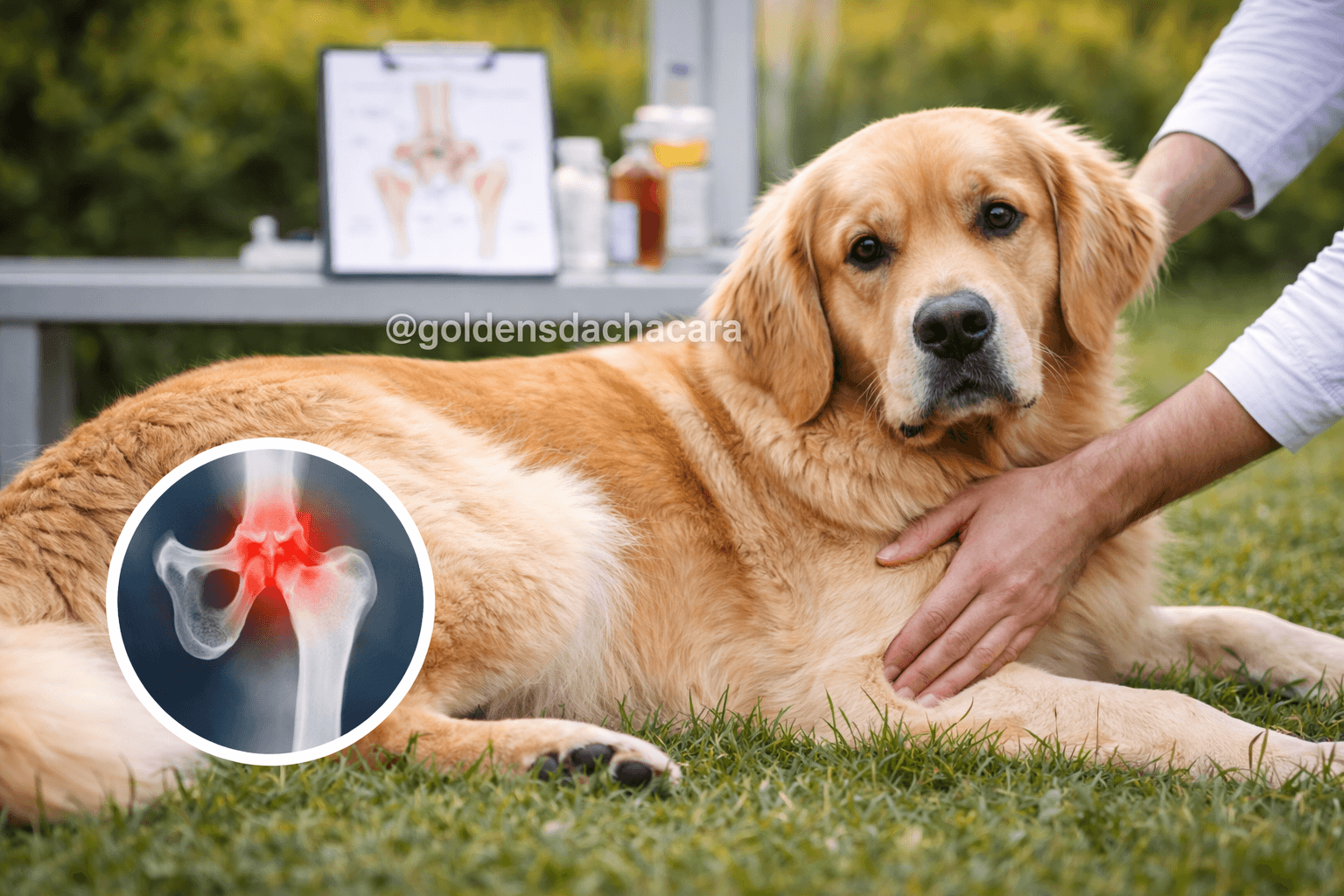
Hip Dysplasia in Dogs: a complete guide to understanding, prevention, and care
Understand what hip dysplasia is, how to identify it, how to prevent it, and how to protect your dog's hip health.
What is hip dysplasia?
Hip dysplasia is a malformation of the dog's hip joint, where the fit between pelvis and femur does not occur correctly. This causes joint instability, which can lead to pain, mobility difficulties, and over time, wear and osteoarthritis.
It is more common in large, fast-growing dogs such as Golden Retrievers, and it usually affects both hips.
Causes: genetics and daily factors
Dysplasia has a strong genetic (hereditary) origin, but external factors also influence it.
Main contributing factors include:
- Excess body weight (obesity)
- Slippery floors
- Intense or premature exercise
- Trauma and excessive strain in puppies
In other words, even with genetic predisposition, proper management can make a major difference.
Symptoms: how to identify
Signs often begin between 4 and 6 months of age, but they vary widely.
Watch for:
- Difficulty walking or running
- Limping
- Pain when moving
- Stiffness
- Muscle loss in the hind legs
- Altered gait (hip swaying)
Important: some dogs may show no obvious symptoms.
Diagnosis and dysplasia grades
Definitive diagnosis is made through X-ray.
Classification:
- A: no dysplasia
- B: near normal
- C: mild
- D: moderate
- E: severe
Even without visible symptoms, testing is essential to identify the condition.
How to prevent and reduce risk
Although dysplasia cannot be fully prevented, risk can be significantly reduced:
- Avoid slippery floors
- Keep body weight under control
- Do not force exercise in puppies
- Avoid high-impact activities (for example, running next to a bike)
- Encourage low-impact activity, such as swimming
- Provide a safe environment from early age
Dysplasia and breeding
Because dysplasia is hereditary, breeding control is essential.
- Dogs with dysplasia should not be bred
- Even asymptomatic dogs may pass it on
- Ideally, breeding should use only dogs with exams proving no dysplasia
This helps reduce incidence in the breed over time.
Conclusion
Hip dysplasia is common, especially in large dogs, and can directly affect quality of life.
With information, prevention, and proper follow-up, it is possible to reduce risk and provide a healthier, more comfortable life for your dog.
Frequently asked questions about hip dysplasia
Hip dysplasia raises many questions, especially because signs are not always obvious.
Dysplasia diagnosis
Can a dog that runs and plays normally still have dysplasia?
Yes. Many dogs with dysplasia show no visible signs, even when active day to day.Which exam confirms dysplasia?
Definitive diagnosis is made through X-rays of the hip joints.At what age can it be identified?
Signs may appear between 4 and 6 months, but testing should be done with veterinary guidance.Prevention and daily care
Do slippery floors really make a difference?
Yes. Slippery floors increase stress on the joints and can worsen the condition.Can exercise in puppies be harmful?
Yes. Forced or excessive exercise can contribute to dysplasia development.Does obesity make dysplasia worse?
Yes. Excess body weight overloads the joints and worsens the condition.Dysplasia and breeding
Can dogs without symptoms still pass on dysplasia?
Yes. Even without visible signs, they can carry genes and pass them to puppies.Can dogs with mild dysplasia be bred?
It is not recommended, because genetic transmission risk still exists.Why is breeding control so important?
Because dysplasia is hereditary, and breeding control helps reduce future cases in the breed.💡 Important tip: Avoid slippery floors, keep weight under control, and do not force exercise in puppies. These simple measures greatly reduce dysplasia risk.